Shower toilet, bidet seat or bidet? UK terms explained
Shower toilet, WASHLET, bidet seat, bidet, douche: what UK shops mean by each, how each is plumbed, and why the old-fashioned bidet is often the simplest to fit.
Updated

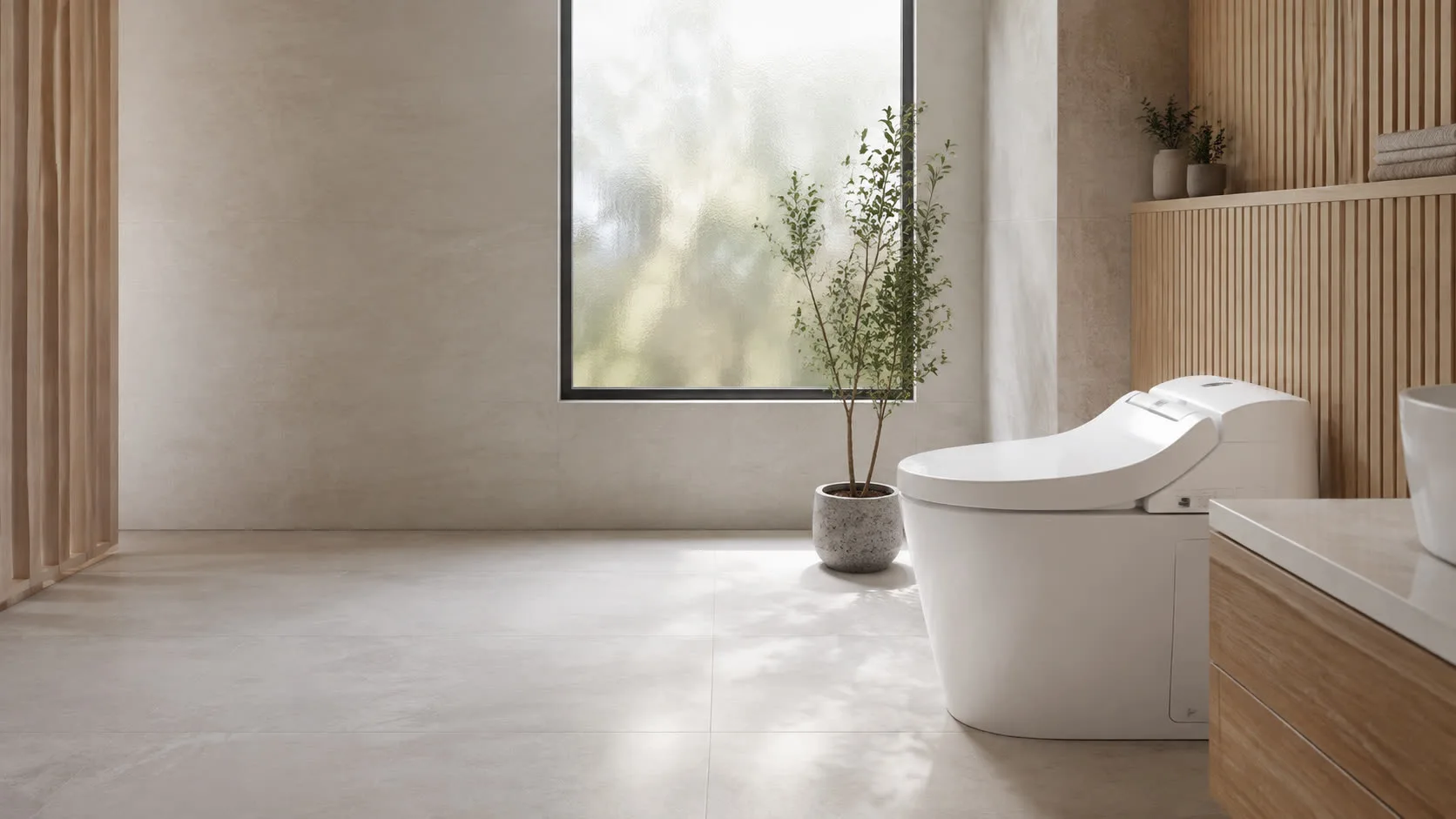
The hard part is not choosing features. It is knowing whether a seat will fit the toilet you already have, or whether you need a new toilet, a plumber and an electrician. We explain the fit checks and real costs before you spend anything.
Your bathroom decides the type of product, and the type decides most of the cost. Start here rather than with a list of features.
Price bands are broad September 2026 planning figures from UK retailer listings, not quotes. See the full cost breakdown, including fitting.
These are practical checks to make before ordering. Check them before you look at wash modes or night lights.
Electric seats need a mains supply, and ordinary plug sockets are heavily restricted in UK bathrooms. Many homes need an electrician to fit a fixed connection point, and some of that work must be notified to building control.
Seats usually tee off the toilet's cold feed. A bidet spray is treated as a high contamination risk under UK water rules, so the product or the plumbing must include the right backflow protection.
"Universal fit" is not a guarantee. The fixing-hole spacing, the length of the bowl and the room in front of the cistern all matter.
What each check involves and costs →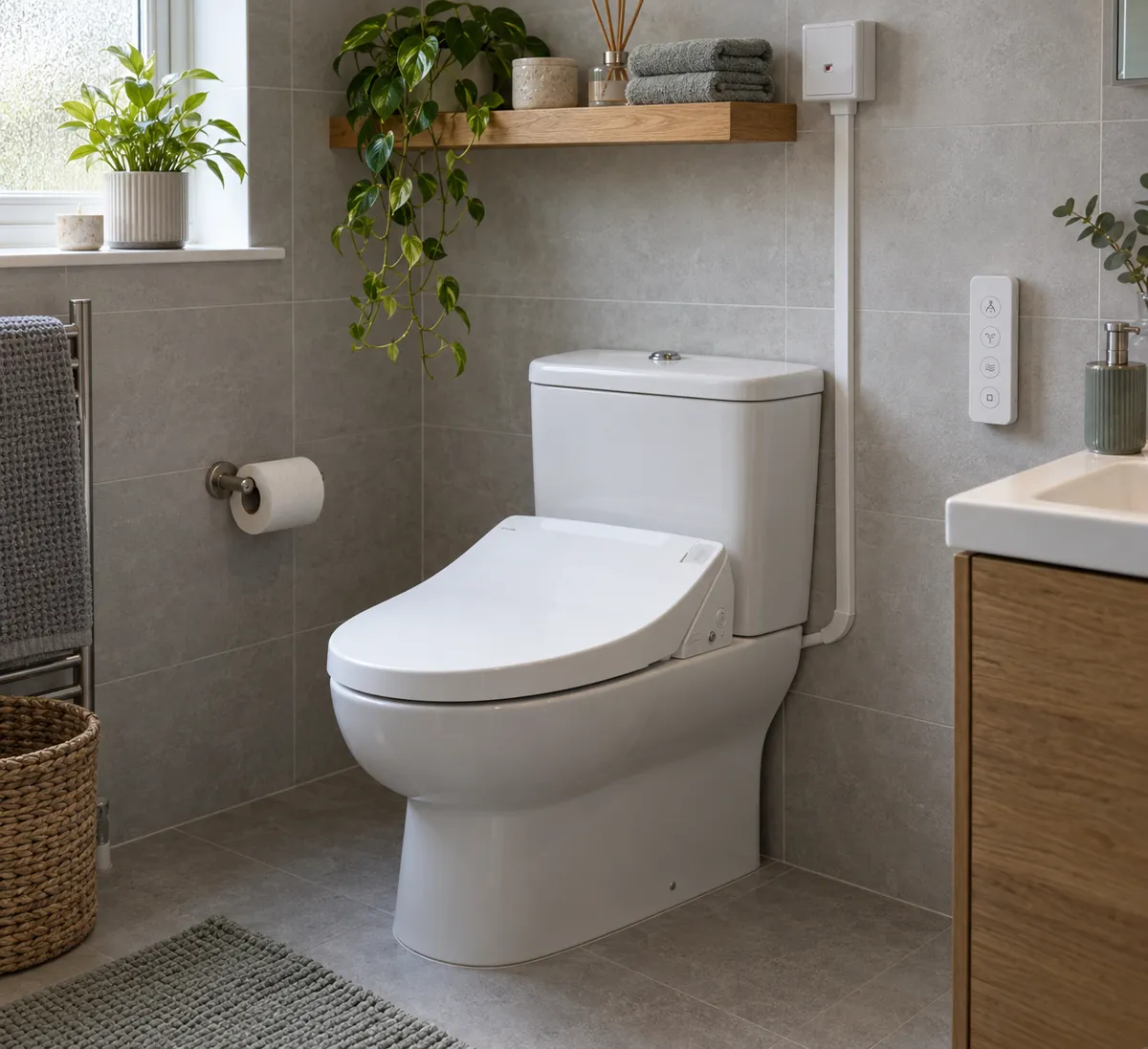
The main reason people buy one is simple: you wash with warm water instead of wiping. Many owners find that cleaner and more comfortable, and some find it easier than wiping when reaching round is difficult. If you are buying for a medical or mobility need, ask an occupational therapist or GP which features matter for you. A heated seat takes the chill off a cold bathroom. Warm-air drying and deodorising are nice extras, not the main event.
What you are really paying for as you move up the price range is comfort and polish: warmer water that lasts longer, quieter operation, a better remote and, on the complete toilets, a cleaner look with nothing on show. See which features are worth paying for.
We have not tested these products hands-on. Our comparison is desk research: manufacturer specifications, UK retailer listings and verified customer ratings where we could find them, with the date we checked. We do not earn commission from any link on this site yet, and no brand has paid to be included. Read who runs the site and how.
Compare eight UK-available seats and toilets side by side, with the fitting warnings for each.
Shower toilet, WASHLET, bidet seat, bidet, douche: what UK shops mean by each, how each is plumbed, and why the old-fashioned bidet is often the simplest to fit.
Updated
A non-electric bidet attachment looks like the easy option, but UK water pressure, cold water and backflow rules can make it the harder one. How to choose.
Updated
Geberit AquaClean models compared for UK homes: which fit an existing toilet, which need a concealed frame, what each one adds, and the prices we checked.
Updated
Why a bidet seat's descale light can come on too late in UK hard water areas, how to find your water hardness, and the routine that keeps the spray working.
Updated
A desk-researched UK shortlist of electric bidet and Japanese toilet seats, sorted by the pan each one fits, plus the 20-minute check to do before buying.
Updated
Seat or full Japanese toilet? How UK power, water rules, pan size and repair support decide it, with real cost ranges and a survey you can do this week.
Updated